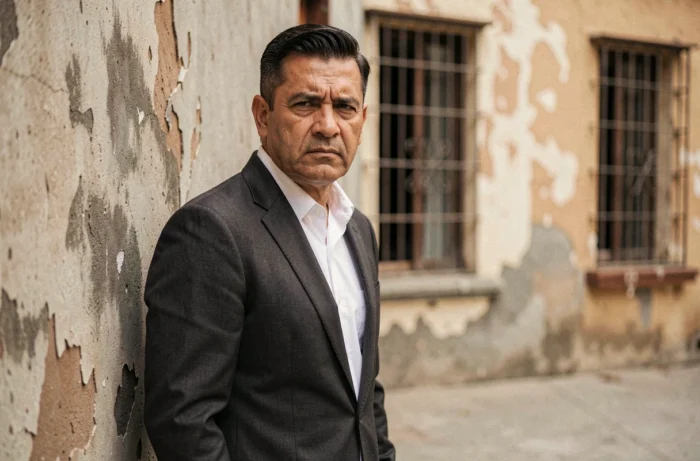
Miguel Ángel Félix Gallardo, born in 1946 in Culiacán, Sinaloa, built one of the most structured criminal empires in the history of Mexican drug trafficking. A former police officer turned bodyguard for a local governor, he gradually organized the transit of Colombian cocaine to the United States through the Guadalajara cartel, before the assassination of a DEA agent precipitated his downfall in 1989.
The plaza system, architecture of modern Mexican drug trafficking
Most accounts dedicated to Félix Gallardo focus on his personal biography. However, the most enduring legacy of his reign lies in an organizational mechanism: the plaza system. This model involved dividing Mexican territory into zones of influence assigned to lieutenants, each controlling a transit corridor to the American border.
Before this structuring, drug trafficking in Mexico operated in a fragmented manner, dominated by Sinaloa families cultivating marijuana and poppy. Félix Gallardo transformed this artisanal landscape into a logistical network capable of handling massive volumes of cocaine from Colombia.
The Guadalajara cartel acted as a sort of criminal holding company. Félix Gallardo coordinated operations alongside Rafael Caro Quintero and Ernesto Fonseca Carrillo, nicknamed “Don Neto.” Detailed profiles regarding the Mexican drug lord on Contre Informations help to better understand the scale of this organization.
This plaza system survived the arrest of its creator. The Sinaloa, Juárez, and Tijuana cartels, which dominated trafficking in the following decades, all emerged from the fragmentation of the territory that Félix Gallardo had unified. Modern cartels are the direct heirs of this territorial division.
The Camarena case, a turning point in the war on drugs in Mexico
In February 1985, Enrique “Kiki” Camarena, a DEA agent stationed in Guadalajara, was kidnapped, tortured, and then murdered. This event radically changed the relations between Mexico and the United States regarding drug trafficking.
Camarena had helped destroy a massive marijuana plantation in the Chihuahua desert, delivering a direct blow to the revenues of the Guadalajara cartel. His kidnapping, carried out in broad daylight on a street in Guadalajara, revealed the degree of protection the cartel enjoyed from local authorities.
American pressure on the Mexican government
Washington exerted unprecedented diplomatic pressure. Operation Leyenda, launched by the DEA to find those responsible for Camarena’s assassination, became one of the longest investigations in the agency’s history. This case forced Mexico to actively cooperate with the United States in dismantling trafficking networks.
Rafael Caro Quintero was arrested in Costa Rica a few weeks after the murder. Ernesto Fonseca Carrillo followed. Félix Gallardo managed to evade prosecution for four more years, continuing to operate from Guadalajara thanks to his political connections.
- The assassination of Camarena triggered Operation Leyenda, a DEA investigation that lasted several years and involved dozens of countries
- Caro Quintero and Fonseca Carrillo were quickly arrested, but Félix Gallardo maintained his activities until 1989
- The case highlighted the collusion between Mexican state agents and drug traffickers, a problem that persists to this day
- Mexican-American bilateral cooperation in the fight against drug trafficking was formalized in the wake of this crisis
Arrest in 1989 and fragmentation of the Guadalajara cartel
Félix Gallardo was arrested on April 8, 1989, in Guadalajara. According to several sources, he anticipated his downfall by organizing a meeting with his main lieutenants to divide the plazas among themselves before his incarceration. This meeting, sometimes referred to as the “Acapulco summit,” would outline the map of future Mexican cartels.
The Arellano Félix brothers inherited the Tijuana plaza. Amado Carrillo Fuentes, future “Lord of the Skies,” took control of the Juárez route. Joaquín “El Chapo” Guzmán and Ismael “El Mayo” Zambada positioned themselves on the Sinaloa corridor. The geography of Mexican drug trafficking in the 1990s and 2000s stems from this division.
More than three decades of detention
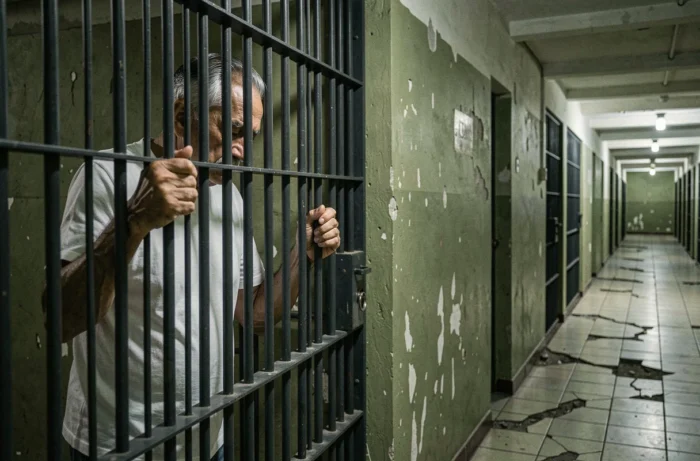
Convicted for drug trafficking, corruption, and possession of weapons, Félix Gallardo spent most of his detention in the high-security penitentiary of Puente Grande in the state of Jalisco. Over the years, his health deteriorated: partial blindness, deafness, and mobility issues.
In September 2022, a federal judge granted him house arrest with mandatory electronic monitoring, due to his health condition. The Fiscalía General de la República (FGR) immediately contested this measure, arguing that it was too lenient given the severity of the crimes.
This tension between the federal prosecutor’s office and the Jalisco prison administration illustrates a recurring institutional conflict in Mexico. Prison authorities indicated that the parole process would not be interrupted despite the prosecutor’s opposition.
Félix Gallardo and the Narcos Mexico series on Netflix
The series Narcos: Mexico, aired on Netflix starting in 2018, placed Félix Gallardo at the center of its narrative. Diego Luna portrays the character with calculated restraint, far from the explosive charisma of a Pablo Escobar as depicted in previous seasons.
Historian Thierry Noël, consulted by several French-speaking media outlets upon the series’ release, emphasizes that Félix Gallardo remains a “mysterious” figure compared to other drug trafficking figures. Less flamboyant than Escobar or El Chapo, his power relied on discretion and political connections rather than ostentatious violence.
The series helped to bring the story of the Guadalajara cartel and Félix Gallardo’s foundational role in organizing Mexican drug trafficking to the public’s attention. However, some historians point out narrative liberties, particularly regarding the chronology of events and the exact nature of the relationships between the cartel and Mexican political institutions.
The former “Jefe de jefes” is now just an old man under surveillance, but the structures he put in place continue to shape the Mexican criminal landscape. The cartels currently vying for territory and trafficking routes to the United States operate according to a territorial logic that he was the first to formalize.