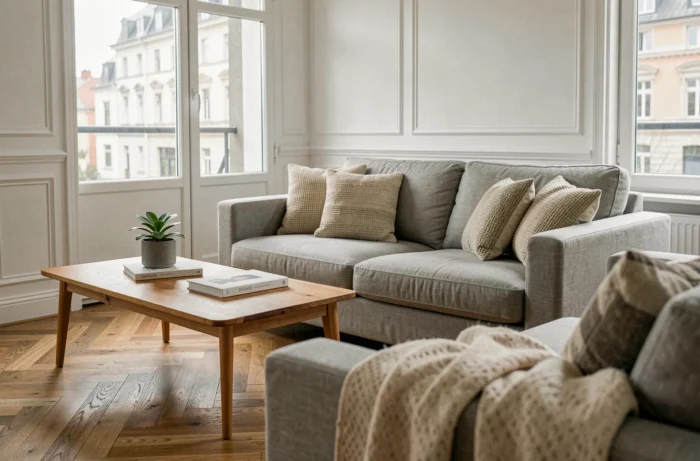
A comfortable and modern home is not just about a choice of colors or a new sofa. Technical decisions regarding the thermal envelope, ventilation, and materials determine real comfort far more than any decor trend. We observe that the most successful projects start with a precise diagnosis before any aesthetic intervention.
Summer comfort and overheating: the aspect that most renovations overlook
Summer overheating has become a renovation criterion in its own right. About half of French buildings are reportedly poorly adapted to heat waves. The RE2020 now includes requirements for summer comfort and resilience to heat waves, which changes the hierarchy of work to be planned.
Installing air conditioning seems like the obvious answer. According to ADEME, 24% of French homes were equipped with an air conditioning system in 2025, up from 18% in 2023. The increase is clear, but air conditioning alone creates energy dependence and does not address the root cause.
We recommend first working on three passive levers:
- External solar protections (adjustable sunshades, slatted shutters, projection blinds) reduce direct solar gains much more effectively than interior curtains, which trap heat between the glazing and the fabric.
- Nighttime ventilation through cross openings evacuates heat accumulated in walls and slabs during the day, provided the home has openings on two opposite facades.
- The thermal inertia of heavy materials (stone, concrete, rammed earth) absorbs daytime temperature peaks and releases them at night, smoothing out temperature variations by several degrees.
A modern interior that neglects these fundamentals will be unlivable for three months a year, regardless of the quality of its layout.
To delve deeper into topics related to housing and renovation choices, the Niraj Web site to explore brings together complementary resources on these issues.
Energy performance and DPE: renovating in the right order
Since January 1, 2024, the supported path of MaPrimeRénov’ requires the intervention of a “Mon Accompagnateur Rénov'” for extensive renovations in individual homes. Since September 30, 2025, the aid specifically targets homes classified E, F, or G before work. Tackling energy performance is no longer optional, it is a regulatory obligation for thermal sieves being rented out.
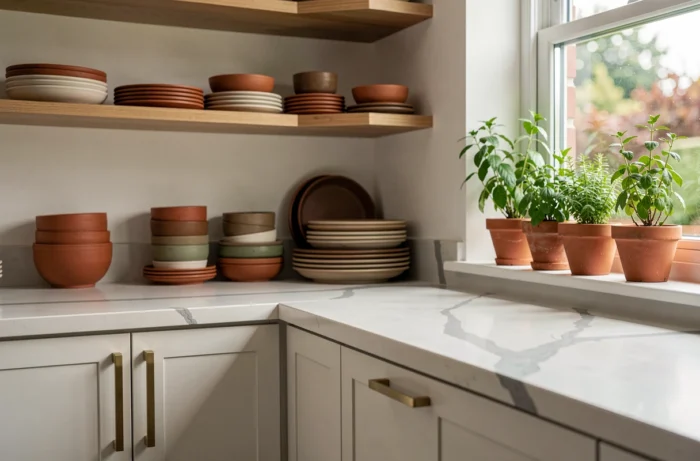
The classic mistake is to redo the kitchen or bathroom before addressing the envelope. A beautiful quartz countertop does not compensate for poorly insulated walls and inadequate ventilation.
Sequencing work to avoid redoing
The logical order of a successful renovation follows a simple principle: first, address what is hidden, then what is visible. Insulation of attics and walls, replacement of windows, installation or upgrading of the mechanical ventilation system, and only then the interior finishes.
Reversing this sequence often requires destroying recent finishes to run ducts or correct thermal bridges. We regularly observe homeowners who redo their bathroom twice in five years because the first project did not include air extraction.
Indoor air quality: diagnose before decorating
Invisible defects deserve a diagnosis before decorative work. The indoor air of a home can be several times more polluted than outdoor air due to volatile organic compounds emitted by paints, glues, particle board furniture, and floor coverings.
Before choosing a new covering for your living space, check the state of your mechanical ventilation. A clogged or poorly sized single-flow mechanical ventilation system does not sufficiently renew the air. The indoor humidity level, condensation traces on windows, and mold at the bottom of walls are reliable indicators of an air renewal problem.

Furnishing materials and VOC emissions
For a modern and healthy interior, prioritize materials rated A+ for VOC emissions. This rating, mandatory for construction and decoration products sold in France, measures emissions 28 days after installation.
- Biosourced or mineral paints (lime, silicate) emit fewer volatile compounds than glycerol paints, even when reformulated.
- Porcelain stoneware or oiled solid wood floors are chemically more stable than laminate or PVC tiles, which often contain plasticizers.
- Low-solvent glues and sealants are available in all professional ranges and do not compromise mechanical performance.
Interior design: balancing decor trends and durability of choices
Decor trends have a short life cycle. A choice of colors or materials dictated by magazines goes out of style in two to three seasons. We recommend reserving trendy elements for easily replaceable accessories (textiles, lighting, objects) and fixing the constants on neutral and durable bases.
A wall covering made of mineral plaster tinted in the mass will withstand trends without aging. A kitchen backsplash made of artisanal tiles adds character without imposing an ephemeral style. Conversely, a strongly patterned graphic wallpaper will be dated in a few years.
Natural light and room layout
Managing natural light remains the most underutilized ambiance lever. Before investing in sophisticated lighting, assess whether your existing openings are optimized. Glazed transoms above interior doors, partially glazed partitions between hallways and living spaces, or simply replacing sheer curtains with adjustable Venetian blinds radically change the perception of a space.
Artificial lighting complements natural light, not replaces it. An effective lighting plan overlays three levels: general indirect lighting (LED cornice, diffusing pendant), targeted functional lighting (kitchen work surface, office), and ambient light points positioned at seating height.
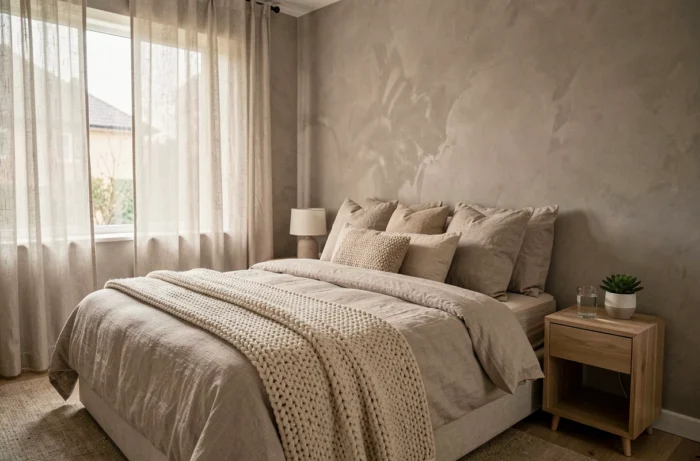
Modernizing your home this year means resisting the temptation to start with the most visible aspects. Structural choices (thermal envelope, ventilation, solar protection) determine real comfort for the next ten years. Finishes and decor come next to dress an already high-performing home, not to mask its flaws.