The French clothing market has been going through a contraction phase for several seasons. Purchase volumes are decreasing, consumers are spacing out their trips to the checkout, and second-hand is reshuffling the cards. In this context, women’s fashion trends can be viewed through three filters: pieces that maintain their relevance from one season to the next, new purchasing channels that modify the available offer, and style signals that reflect a real change in behavior.
Women’s Fashion Market in France: What Recent Data Says
The underlying trend is not one of expansion. Clothing expenditures are declining in volume, and purchases are becoming more thoughtful. Several physical retailers have reported disappointing results during the summer period, confirming a gap between supply and actual purchasing behaviors.
This decline does not indicate a disinterest in fashion. It rather reflects a shift towards less frequent but more targeted purchases. Consumers prefer pieces that they wear for a long time, even if it means investing more in a unique item rather than multiplying low-priced baskets.
French independent brands are managing to stand out in this context. Their positioning on limited collections, crafted materials, and limited production aligns with this demand for uniqueness. For those looking to refine their clothing choices, it is possible to learn more about Mode Sign, a resource that brings together current fashion inspirations.
Second-Hand and Unique Style: The Nuance Between Solidarity Reuse and Fast Second-Hand
Second-hand has established itself as a common purchasing channel. According to data from Oxfam France, about one in two French people reports having bought at least one second-hand product in the last twelve months. The phenomenon has moved beyond a militant niche to become a widely shared consumption habit.
However, not all second-hand circuits are equal. The same report distinguishes what it calls “fast second-hand” (online resale platforms, commercial thrift stores) from solidarity reuse (associative shops like Emmaüs, resource centers). Six out of ten second-hand garments now pass through commercial channels, with a carbon footprint up to five times higher than that of a solidarity shop for an equivalent volume.
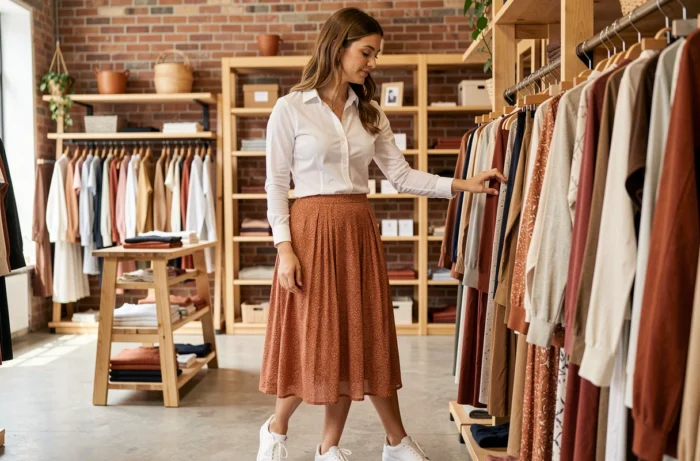
For those seeking a truly unique style, this distinction has practical consequences. Solidarity shops offer less algorithmic sorting, more heterogeneous pieces, and often brands or cuts absent from mainstream platforms. The act of purchasing is slower there, less guided by current trends, which encourages personal clothing combinations.
The Oxfam study also highlights that second-hand does not compensate for an ever-increasing textile production. The organization calls for a 30% reduction in textile volumes placed on the market by 2035. “Unique” women’s fashion also involves this: less volume, more selection.
Colors and Strong Pieces for Spring-Summer: What Is Actually Worn
Spring-summer collections highlight pink in all its variations and pastel tones. These colors dominate shop windows and online catalogs. Powder pink, bright pink, and lilac are found on flowing dresses, structured jackets, and high-waisted pants.
Beyond color, certain pieces are making a strong comeback:
- The lightweight linen or blended cotton jacket, worn open over a plain t-shirt, replaces the strict blazer in mid-season looks
- Wide-leg trousers, often in canvas, continue to gain ground against slim jeans, with cuts that fall straight from the waist
- The midi dress with floral or geometric patterns, often belted, remains a reliable choice for an effortlessly dressed look
- The mid-rise straight jean, neither too tight nor too loose, establishes itself as the versatile basic of the season
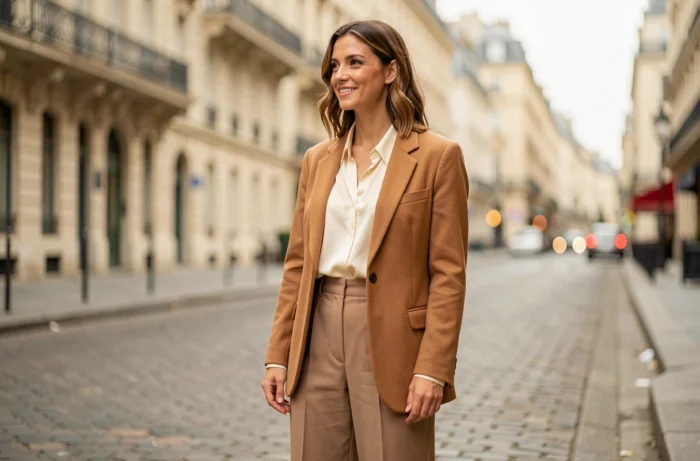
These pieces are not new. Their recurrence season after season confirms that they form a wardrobe foundation rather than a fleeting trend. The challenge of personal style lies less in the choice of the piece than in how it is paired.
Artificial Intelligence and Women’s Fashion: A Still Nascent Personalization Tool
Several platforms are now integrating recommendation tools based on artificial intelligence. Virtual try-on, personalized look generation, and automated morphological analysis are among the features deployed by some fashion e-commerce players.
However, field returns diverge on the reliability of these tools. Algorithmic recommendations tend to standardize suggestions rather than promote a distinctive style. AI models rely on massive sales data, which naturally pushes towards the most popular pieces, not the most original.
For consumers seeking a personal style, these tools work better as size or cut filters than as style advisors. Real wardrobe personalization still largely relies on manual experimentation: trying, adjusting, combining pieces from various sources.
Building a Sustainable Style Without Following Every Micro-Trend
The proliferation of micro-trends on social media (a pattern, a cut, an accessory propelled by a few viral videos) creates constant purchasing pressure. The most sustainable women’s fashion trends are those that integrate into an existing wardrobe without rendering it obsolete.
Some concrete guidelines help to sort through:
- A trendy piece that requires buying three other items to “work” is not a good clothing investment
- Neutral colors (off-white, beige, navy blue) absorb any seasonal color without visual conflict
- A garment worn less than ten times a year costs more per use than a piece twice as expensive worn every week
The Oxfam report and the market contraction figures point in the same direction. Consumers who buy less but better wear more coherent and recognizable outfits than those who follow every seasonal wave. A wardrobe tightened around carefully chosen pieces lasts longer than a closet inflated by promotions.