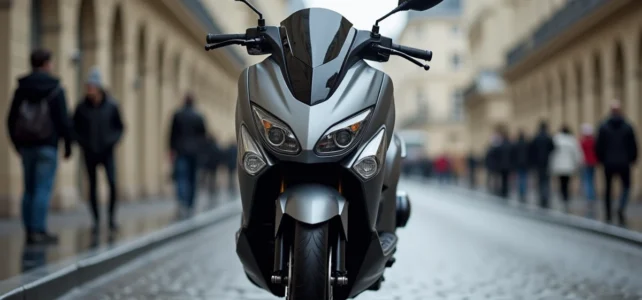
The Yamaha TMAX 560 already has one of the highest prices in the maxi-scooter segment. With persistent rumors about an upgrade to a 750 cm³ engine, the question of pricing becomes central for potential buyers. Several factors are converging to push prices higher starting in 2026, and they are not limited to a simple engine change.
Euro 7 Emission Standards and the Compliance Cost of the TMAX
Each generation of scooter or motorcycle costs a bit more than the previous one. Part of this inflation comes directly from European emission standards.
The Euro 5+ standard, already in effect, imposes strict limits on particulate and nitrogen oxide emissions. The upcoming Euro 7 standard goes even further. To comply, manufacturers must add more sophisticated exhaust after-treatment systems, additional sensors, and rethink the combustion of their engines.
In practical terms, this means more embedded components, longer research and development phases, and higher certification costs. Manufacturers anticipating the Euro 7 standard are already integrating more complex combustion and pollution control architectures. This reasoning applies to two-wheelers over 125 cm³: every regulatory tightening impacts the selling price.
Transitioning from a 560 cm³ engine to a potential 750 cm³ engine while adhering to these pollution constraints represents a costly technical challenge. The price of the Yamaha TMAX 750 would therefore include a significant portion for regulatory compliance, even before discussing equipment or finishes.

Yamaha’s Premium Positioning: Why the TMAX Can’t Stay at the Same Price
The TMAX is not an ordinary scooter. With over 340,000 units sold in Europe since 2001, it occupies a unique place in Yamaha’s lineup. The Japanese manufacturer positions it as a high-end product, halfway between an urban scooter and a sports motorcycle.
This positioning comes at a cost. Each new generation brings additional technologies:
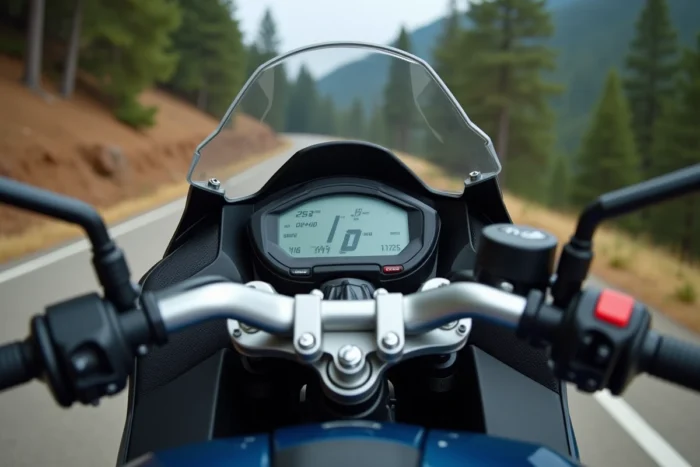
- Connected TFT display with navigation and riding mode management, requiring specific software developments
- Aluminum chassis derived from motorcycle technology, lighter but significantly more expensive to produce than steel
- Traction control and cornering ABS systems borrowed from higher displacement sport bikes
- Redesigned seat and ergonomics for long-distance comfort with each generation
A TMAX 750 would add a larger engine to an already premium package. Yamaha has no interest in compressing its margins on a flagship model. On the contrary, a mechanical upgrade commercially justifies a price repositioning.
The 25th anniversary edition for 2026, with its matte metallic gray finish and red seat inspired by the Black MAX from 2006, clearly illustrates the strategy: creating rarity and desire around the model. This type of limited edition mechanically drives prices up, including those of the standard version.
Rising Production Costs and Raw Material Pressures
Beyond the product itself, the global industrial context weighs on prices. Two-wheeler manufacturers face several simultaneous pressures.
Raw materials like aluminum and steel remain at high levels. The TMAX uses a cast aluminum frame, a material whose price fluctuates according to geopolitical tensions and global demand. A larger engine also requires more raw material.
Electronic components, which have become central in modern maxi-scooters, are also experiencing cost increases. A color TFT display, a Bluetooth connectivity system, tilt sensors for cornering ABS: each of these elements depends on strained supply chains.
Logistics adds to the complexity. Yamaha manufactures its engines and assembles its vehicles in Japan. The cost of maritime transport and fluctuations of the yen against the euro directly influence the final price in European dealerships. A weak yen benefits Yamaha, but this variable remains unpredictable.
Honda Competition and Pressure on the Maxi-Scooter Segment in 2026
Yamaha does not set its prices in a vacuum. Honda, with its Forza 750, occupies the same niche and pushes the TMAX to justify its price difference through superior performance.
Why is this a factor for price increase rather than decrease? Because competition is upward in this segment. Buyers of premium maxi-scooters compare equipment, power, and comfort. Lowering the price would degrade the perceived quality of the TMAX.
Yamaha has every interest in maintaining or even increasing its price to remain consistent with the model’s image. A TMAX 750 sold at the same price as the 560 would send a contradictory signal to the market. Buyers themselves associate a higher price with a legitimate upgrade, especially when engine displacement increases.
The sporty maxi-scooter segment remains relatively narrow. The volumes do not allow for the economies of scale enjoyed by 125 scooters or mid-displacement motorcycles. This structural reality keeps unit costs high, regardless of the commercial strategy adopted.
The combination of these factors (regulation, positioning, industrial costs, competitive dynamics) outlines a clear scenario. The transition to a TMAX 750 in 2026 would logically come with a significant price increase, likely several hundred euros above the current price of the 560. Interested buyers should keep an eye on Yamaha’s official announcements starting in the first half of 2026.