
A forgotten bag of flour at the back of the cupboard, a date that has passed for several months, a somewhat flat smell: the temptation to throw everything in the trash is strong. Before doing so, the composter deserves to be considered. Expired flour decomposes very well in compost, provided you follow a few simple rules to avoid unpleasant surprises.
Expired flour in compost: what the fine texture really changes
Most composting guides talk about peelings, coffee grounds, or eggshells. Flour, however, presents a different problem related to its grain size. A powder this fine, poured all at once into the bin, packs into a compact layer that blocks air.
Without air circulation, aerobic microorganisms slow down. Decomposition shifts to an anaerobic process, which generates unpleasant odors. The result: compost that smells bad and attracts flies, gnats, and even rodents in search of easy food.
This phenomenon does not occur with an apple core or a dead leaf, because these materials maintain a structure that allows oxygen to pass through. Flour does not. If you want to use expired flour in compost without causing problems, the key is in one action: never pour it in a block.
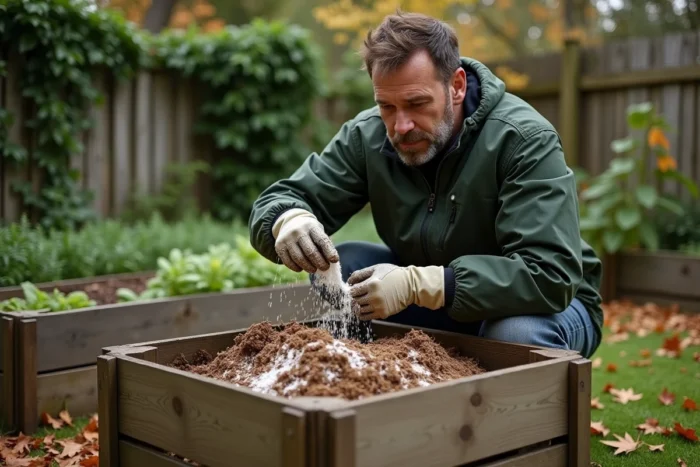
Dosage and method for adding flour without harming the compost
You may have noticed that a handful of sawdust mixes better than an entire bag? The principle is the same with flour. Here’s the method that works, in three steps.
- Sprinkle the flour in a thin layer, as if you were dusting a work surface. A few handfuls spread over the surface of the compost are better than half a kilo dumped in the same spot.
- Immediately cover with a dry, structuring material: dead leaves, shredded branches, torn cardboard, or straw. This cover prevents packing and restores the balance between wet and dry materials.
- Lightly mix the area with a fork or compost aerator to incorporate the flour into the pile rather than leaving it on the surface.
For a standard bag of flour, spread the addition over several days. A home composter can easily digest a few handfuls with each addition, but not a kilo at once.
Special case of the worm composter in an apartment
In a worm composter, the volume is much smaller and the moisture-aeration balance is more fragile. Flour can be used here, but in even more modest quantities. A tablespoon per addition is sufficient in a small bin.
Spread it over the entire surface and immediately cover it with a dry bedding (torn newspaper, for example). The worms do not tolerate excess fine and compact material well, which can locally acidify their environment.
Moldy or infested flour: when not to compost
Not all expired flour is equal. The minimum durability date (MDD) indicated on the package signals a decrease in taste quality, not an immediate health hazard. Flour that is simply “past its date,” without a rancid smell or suspicious traces, remains perfectly compostable.
However, three signals should alert you:
- A strong rancid smell, a sign that the lipids in the flour have oxidized. This flour can still go into the compost, but in very small quantities, as the smell attracts pests.
- Visible mold (green, black, or white spots). Mold is not a problem in well-aerated and warm garden compost, but should be avoided in an indoor worm composter.
- The presence of food moths or weevils. In this case, the entire package deserves treatment: place it in the freezer for 48 hours to kill the larvae before composting it, otherwise, you risk spreading insects in your kitchen.
If your flour has a rancid smell, mold, and insects, outdoor garden compost remains the only viable option. The worm composter would not tolerate this addition.
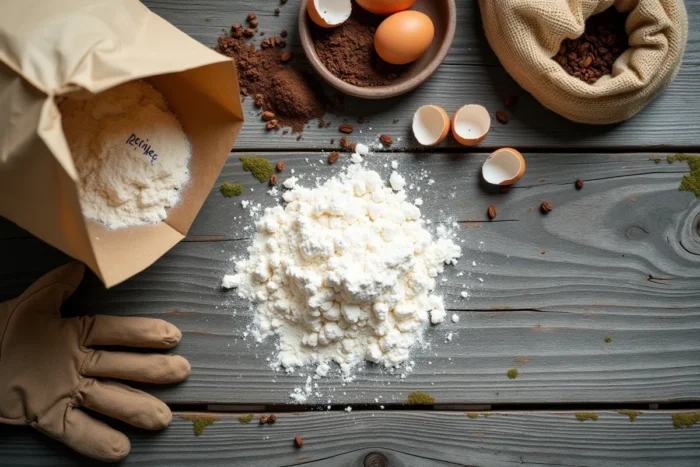
Expired flour and sorting organic waste: a good reason to compost rather than throw away
Since the obligation to sort organic waste at the source, expired flour falls into the category of recyclable food waste. Throwing it away with household waste means sending organic material that decomposes naturally in a few weeks to incineration or landfill.
Composed mainly of starch, flour adds carbon to the compost. It plays a role comparable to that of brown paper or cardboard in the carbon-nitrogen balance of the pile. In small doses, it nourishes the bacteria responsible for raising the temperature of the compost.
If you do not have a composter, check the organic waste collection points in your municipality. Flour belongs there, just like peelings or stale bread.
Other uses before composting
Before sending it to the bin, know that expired flour without a suspicious smell can still be useful. It cleans stainless steel surfaces when mixed with white vinegar, absorbs grease in a pan or fryer, and works as dry shampoo in a pinch. Composting should be the last resort, not the first reflex.
Expired flour in compost poses no technical problems if two principles are respected: sprinkle rather than pour, and always cover with dry material. A bag forgotten in the cupboard is not a lost waste; it is an organic resource that returns to the soil in a few weeks, without odor, without pests, and without waste.