Buying a pair of running shoes or a weight bench does not involve the same decision-making process, and the selection criteria vary depending on the discipline, level of practice, and the physical constraints of each athlete. The sports equipment market in France is also experiencing regulatory changes that are gradually altering the way products are designed, labeled, and marketed.
ESPR Regulation and Ecodesign: What Changes for Sports Equipment
Since July 18, 2024, the European regulation ESPR (EU 2024/1781) imposes ecodesign requirements on almost all physical goods sold in the European Union. Textiles, shoes, electronics embedded in watches or heart rate sensors, various equipment: sports equipment falls under the scope of this regulation, even when manufactured outside the EU.
This regulation makes it mandatory to consider the complete life cycle of a product, from raw materials to end-of-life. The criteria of repairability, durability, and incorporation of recycled materials become obligations, not just marketing arguments. For consumers, this translates into the gradual appearance of enriched product sheets: durability score, information on repairability, data on recycling.
In practical terms, before purchasing equipment, checking for these indicators on the product sheet becomes a useful reflex. A manufacturer that displays a high repairability score commits to the availability of spare parts. For those investing in expensive equipment (exercise bike, rowing machine, technical shoes), it is a guarantee of longevity that traditional labels did not provide.
Anyone wishing to buy sports equipment on Free Sport can compare technical sheets while keeping these new criteria in mind, beyond just the displayed quality-price ratio.
Product Recalls and Safety of Sports Equipment
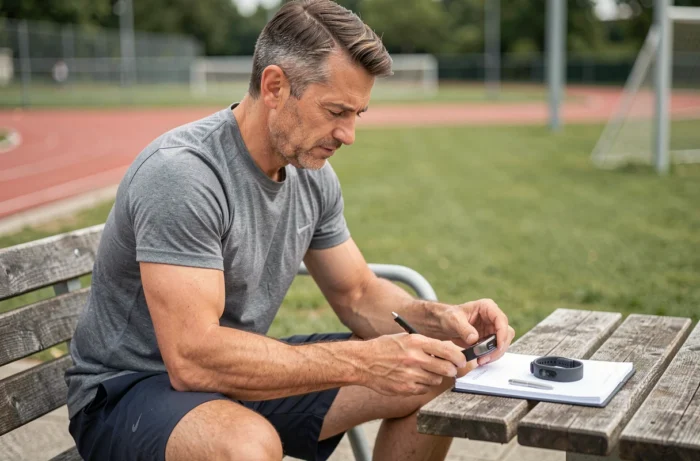
The safety of equipment is not limited to the perceived sturdiness in stores. In France, the RappelConso platform regularly lists products recalled from the market due to defects that could cause injuries. Sports equipment is not exempt from these procedures.
A recent case illustrates the problem well: climbing equipment sold for several years was subject to a recall procedure after safety defects were detected. The reactions of regular users show that trust in a brand does not exempt one from checking official alerts.
Before any purchase, several checks are necessary:
- Consult RappelConso to ensure that the targeted model is not currently under a recall notice, even if it is still for sale on some platforms.
- Check for the presence of applicable standards (CE marking for the relevant equipment, specific standards according to the discipline such as EN 12572 for climbing).
- Prefer retailers that provide after-sales support and relay recall alerts to their customers.
Field feedback varies on the responsiveness of retailers to recalls. Some immediately suspend sales, while others delay removing the affected items from their online shelves.
Sports Shoes and Textiles: Criteria That Price Does Not Reflect
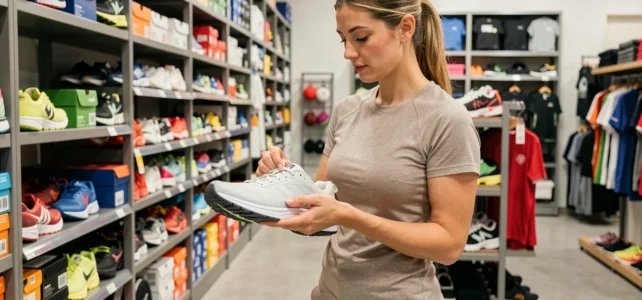
The shoe category often represents the first investment for an athlete, whether for running, gym fitness, or hiking. The average price of running shoes in France has significantly increased in recent years, driven by the rise in high-end carbon-plated models and cushioning technologies.
A high price does not guarantee suitability for your morphology or practice. Two criteria remain decisive and are often overlooked:
The first concerns the type of stride and foot morphology. A pronating runner who buys a neutral model, even a high-end one, exposes themselves to joint pain. Gait analysis, offered by some specialized stores, remains the most reliable way to guide the choice.
The second pertains to the frequency of use. A pair intended for three outings per week does not face the same constraints as a pair used once a week. The lifespan of a shoe depends more on mileage than on elapsed time, which is generally not considered by commercial warranties.
On the textile side, the aforementioned ESPR regulation will have a direct impact. Since July 19, 2026, large companies are no longer allowed to destroy unsold new clothing and shoes, except for justified safety reasons. This measure encourages brands to adjust their production volumes and develop second-hand or clearance channels, which expands the available offer for attentive buyers.
Weight Training and Fitness Equipment: Deciding Between Home and Gym
The French market for home fitness equipment has seen notable growth, driven by lockdowns and changing habits. The decision between equipping at home and subscribing to a gym is based on parameters that are rarely clearly stated.
A weight bench, an Olympic bar, and a set of dumbbells represent a significant initial investment, but can be recouped in less than two years compared to a premium gym subscription. However, space constraints, lack of coaching, and the risk of poor posture without supervision are real limitations.
For cardio equipment (bike, rowing machine, treadmill), the quality of the mechanical structure takes precedence over connected features. A treadmill with an undersized motor for daily use will break down well before the end of its theoretical lifespan. Checking the continuous motor power (not the peak power, which is often highlighted) and the maximum supported weight provides a more reliable indication than online reviews.
The question of resale should also be considered in advance. Steel weight training equipment (bars, plates) retains its value well in the second-hand market. Electronic devices (motorized treadmills, connected bikes) depreciate quickly, especially if the manufacturer stops updating the associated app.
Choosing suitable sports equipment requires considering three variables: the level and frequency of practice, verifiable safety guarantees on the product, and actual durability beyond commercial promises. The new European regulatory obligations are gradually making this information accessible, provided one knows where to look on the product sheet.