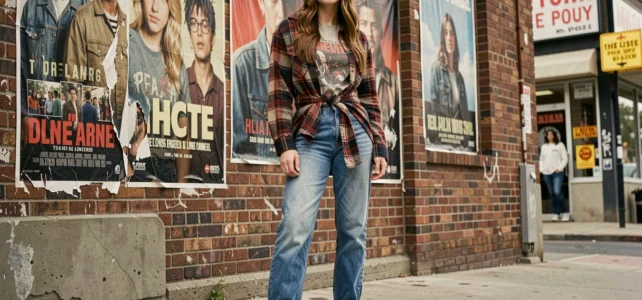
In 1994, opening a fashion magazine was like flipping through several decades at once. On the same runway, you could see evening gowns draped in a 40s style alongside torn flannels worthy of a Seattle concert. This collision of fashion codes, far from being an accident, precisely defines what makes this year so unique in the history of 90s fashion.
John Galliano’s Princess Lucretia Collection: The Show That Changed Everything
When discussing iconic looks from 1994, John Galliano’s Princess Lucretia Spring-Summer 1994 collection always comes to mind. This show, presented in almost artisanal conditions compared to today’s shows, blended historical references with asymmetrical cuts. The result earned Galliano the title of British Designer of the Year at the British Fashion Awards that same year.
This recognition directly paved the way for his leadership at major Parisian houses. This collection features a work on bias and draping that stood in stark contrast to the prevailing minimalism. For those interested in the fashion trends of 1994, this collection remains a necessary reference point.
The paradox of this year is that Galliano offered opulent romanticism at the exact moment Calvin Klein stripped his shows of all ornamentation. The two approaches coexisted on the same Fashion Week calendars, and both found their audience.
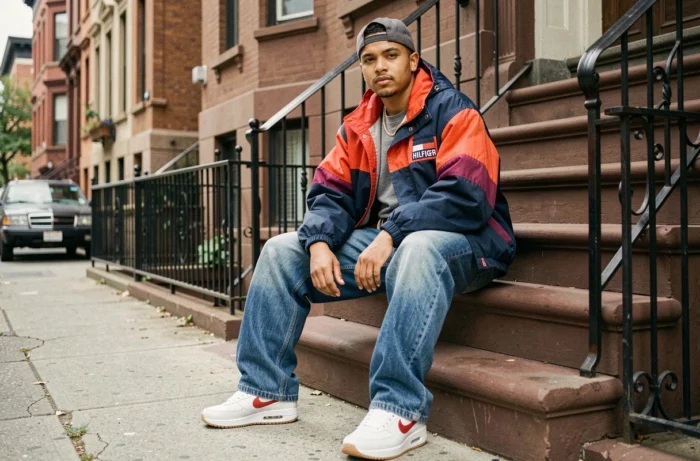
Grunge vs. Minimalism: Two Wardrobes That Didn’t Speak
On the ground, in 1994, grunge style and minimalism were vying for the streets. On one side, flannel shirts worn open over a worn t-shirt, faded jeans, and boots. On the other, clean cuts, neutral tones, and fluid materials worn by designer collections like Calvin Klein.
The peculiarity of 1994 is that haute couture and ready-to-wear could no longer agree on a common direction. A recent documentary about the Spring-Summer 1994 season highlights that this year is precisely when fashion “tore itself between several incompatible visions.”
Grunge in Everyday Life: What We Really Wore
The grunge look of 1994 wasn’t just about copying Kurt Cobain. Layers were piled on, thrift store pieces were mixed with new basics. The trend worked because it required neither budget nor stylistic expertise, just a certain assumed nonchalance.
Mass-market brands quickly integrated these codes. Retailers offered pre-worn flannels and deliberately distressed jeans, transforming a movement born in Seattle clubs into a common consumer product.
Calvin Klein’s Minimalism and Its Stripped-Down Silhouettes
On the opposite side, Calvin Klein imposed sharp lines and reduced palettes. Kate Moss, then the face of the brand, embodied an anti-glamour aesthetic that redefined the standards of modeling. The clothes seemed almost secondary, serving an attitude more than a style.
This minimalism also left a lasting mark on the decade. The designers who adopted it in 1994 laid the groundwork for a trend that still dominates some contemporary collections.
Vivienne Westwood and Christian Lacroix: The Forgotten Fall 1994 Collections
Much is said about grunge and minimalism when discussing this period, but other designers offered equally striking visions. Vivienne Westwood, with her Fall 1994 collection, pushed tartan and corseted cuts in a theatrical direction that had nothing to do with the rest of the season.
Christian Lacroix, on the other hand, presented a Spring 1994 couture collection where embroideries and saturated colors violently contrasted with the prevailing austerity. These two approaches remind us that 1994 was not a year of a single trend, but a crossroads of radically different visions.
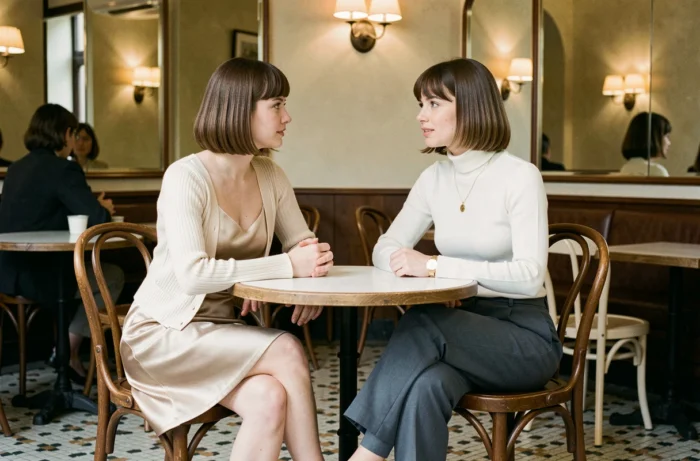
High-Waisted Jeans and Chunky Sneakers: The Fashion Pieces of 1994 That Are Making a Comeback
Some pieces from 1994 never really disappeared; they simply changed context. Here are those that have best traversed the decades:
- High-waisted jeans: omnipresent in 1994, relegated to the background in the 2000s, then making a strong comeback with the 90s revival that is now affecting Generation Z
- Chunky sneakers: they began to replace classic shoes on the streets, a movement that culminated with the “dad shoes” trend a few years later
- The flannel shirt worn open: transitioned from grunge staple to basic in both men’s and women’s wardrobes, available in all retailers
- The slip dress: worn over a t-shirt or on its own, this garment encapsulates the mix of nonchalance and sophistication that defined the style of 1994
Returns vary on this point, but most of the iconic pieces from 1994 still work today because they relied on simple cuts and accessible materials, not on a fleeting fashion effect.
What distinguishes the fashion of 1994 from the rest of the decade is this coexistence of opposites. Designers were not seeking consensus. Galliano, Westwood, Lacroix, and Calvin Klein offered incompatible wardrobes, and it is precisely this dispersion that produced so many iconic looks in a single year. The clothes of 1994 have not aged because they already followed no common rules.