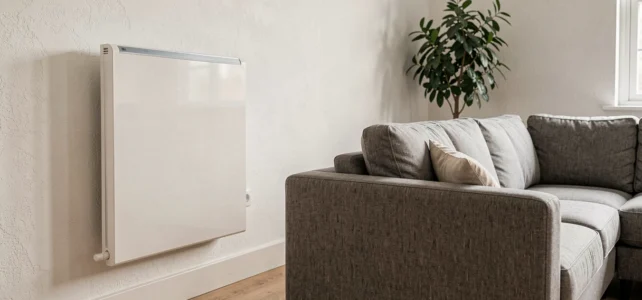
The best brands of electric radiators are not distinguished solely by their heating technology. Connected control, the quality of the heating body, the durability of components, and after-sales service weigh as heavily as the type of inertia chosen. This ranking is based on the breadth of the range, reliability in the field, and each manufacturer’s ability to meet varied needs, from studio apartments to family homes.
1. Atlantic: the widest range and French manufacturing
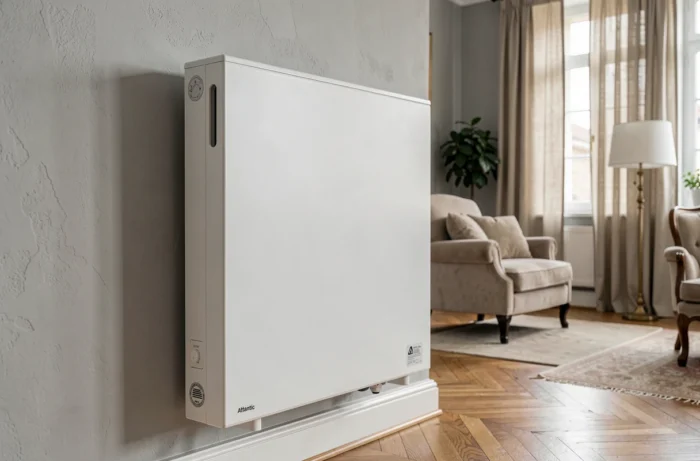
Atlantic dominates the French market due to the extent of its catalog. From entry-level convectors to connected soft heat radiators, every price segment is covered. Manufacturing remains localized in France, which facilitates access to spare parts and shortens after-sales service times.
We recommend the Accessio range with fluid inertia for budget-conscious projects. In projects where thermal comfort is paramount, the double-core series offers rapid temperature rise coupled with long-lasting heat release. Control via the Cozytouch app unifies multi-room management.
To compare Atlantic with its direct competitors, the electric radiator comparison on Ghimel Le Mag details performance differences by technology.
2. Thermor: high-end connected
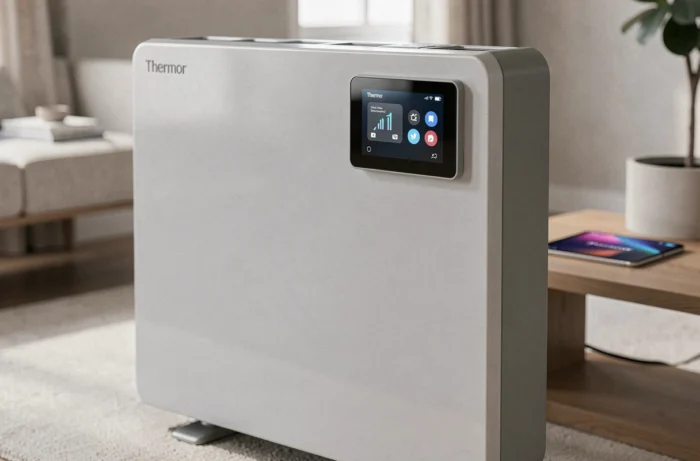
Thermor belongs to the same group as Atlantic but positions itself in a higher-end niche. The price differences between a basic convector and a connected inertia model are significant, and this is acknowledged: the brand focuses on perceived comfort and smart control.
Open window detection, self-programming by learning habits, and compatibility with voice assistants distinguish Thermor in the premium segment. The refined design, often in low or extra-flat formats, integrates into demanding interiors.
3. Noirot: the specialist in dry inertia
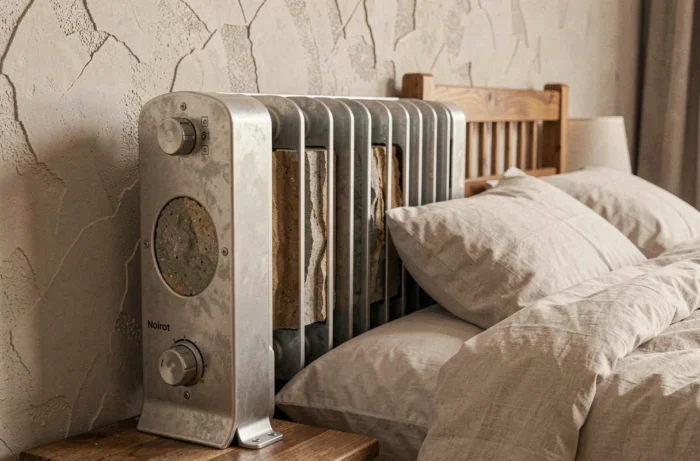
Noirot concentrates its expertise on active cast iron heating bodies. This technology ensures uniform heat distribution and long-lasting inertia after shutdown. The deliberately narrowed catalog targets users who prioritize thermal consistency over versatility.
The 2026 guide published by Noirot confirms the focus on devices with low temperature amplitude, with a reduced gap between setpoint and actual temperature. This is a criterion that consumer articles often underestimate, while it directly affects perceived comfort.
4. Intuis: industrial grouping and brand synergy
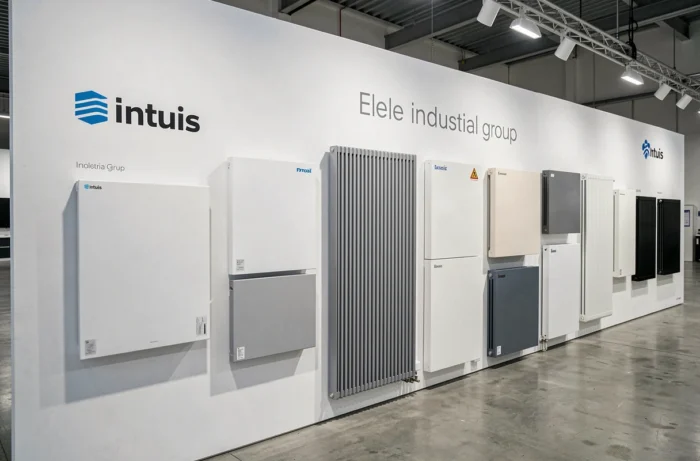
Intuis brings together several historical brands under a single industrial banner. This consolidation allows for shared R&D while maintaining distinct product identities. The group thus covers both entry-level and professional segments.
The benefit for installers lies in the cross-compatibility of accessories and control systems among the group’s brands. For individuals, this translates into a wider choice without breaking the ecosystem.
5. Sauter: quality-price ratio in the mid-range segment
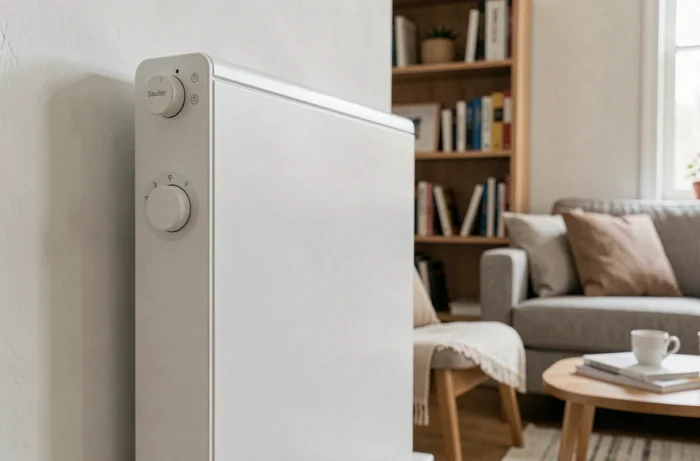
Sauter positions itself in the mid-range segment with accessible fluid and dry inertia radiators. The brand offers weekly programming functions and presence detection on most of its models, including entry-level ones.
Field feedback indicates good longevity of heating elements. After-sales service remains a point of concern: we observe variable response times during periods of high winter demand.
6. Rothelec: natural stone inertia radiators
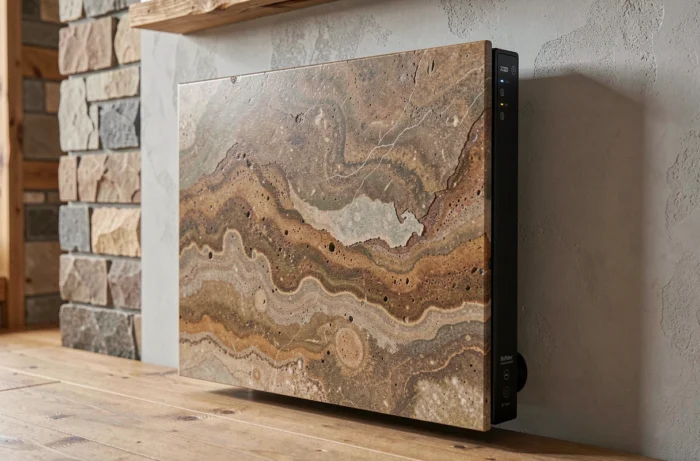
Rothelec stands out for its use of natural stone heating cores (soapstone, granite). The thermal release is gradual, and the radiation is particularly even. It is a relevant choice for large rooms where temperature uniformity is difficult to achieve.
The brand manufactures in France and offers technical support including room-by-room sizing. The pricing remains high, justified by the quality of the material and the warranty duration.
7. Carrera: the best budget compromise
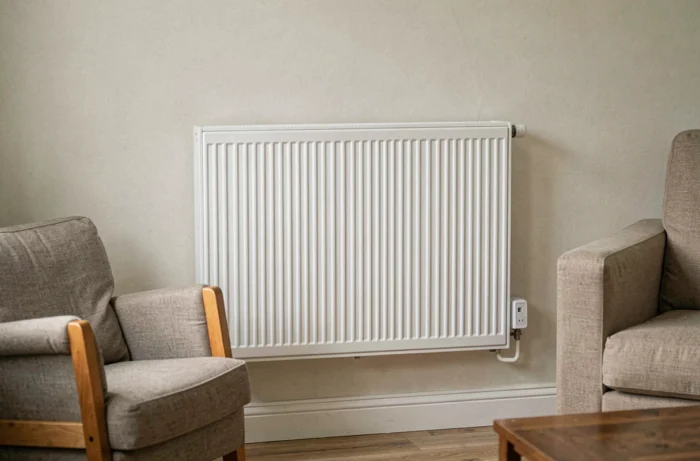
Carrera targets first-time buyers and rental investors with budget-friendly inertia radiators. The quality-price ratio is among the most competitive on the market, without sacrificing basic programming functions.
The trade-off lies in the design, which is more standardized, and the lack of advanced connectivity in entry-level models. For a rental property or a secondary room, Carrera meets the specifications without extra cost.
8. Aterno: radiators adapted to every configuration
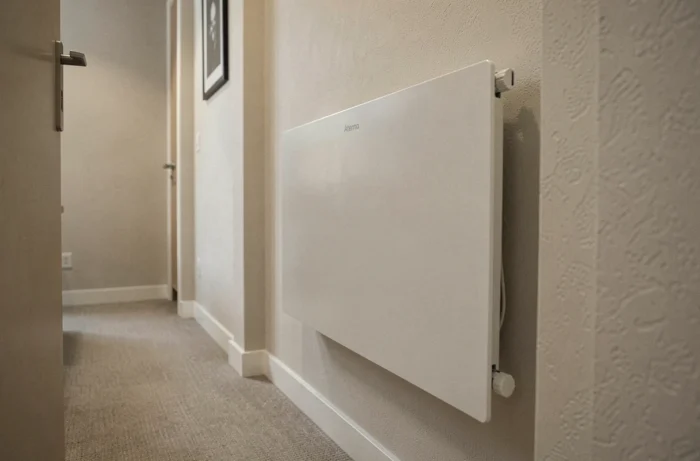
Aterno stands out for its tailored approach. The brand offers a preliminary thermal study and adapts the type of radiator to the configuration of the home: insulation, exposure, volume. This approach reduces the risk of oversizing or undersizing.
The business model relies on direct sales with installation included. This limits availability in large retail stores but ensures rigorous installation follow-up.
9. Thomson: public innovation
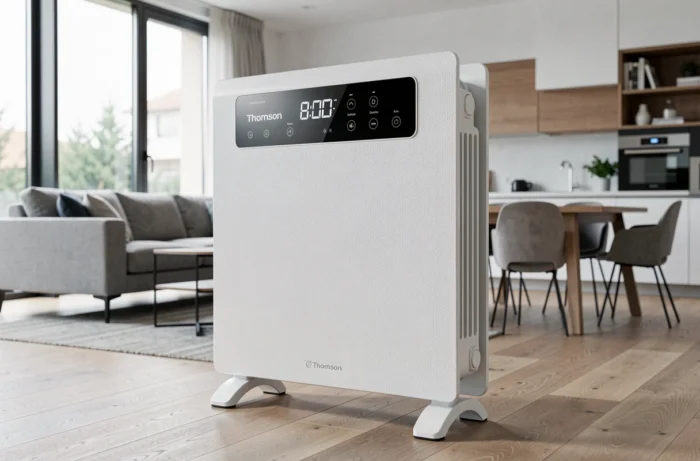
Thomson applies its expertise in consumer electronics to electric heating. The radiators integrate touch interfaces, native Wi-Fi connectivity, and adaptive regulation algorithms. Remote control via smartphone is native across the entire range.
The brand appeals to a tech-savvy audience that wishes to integrate heating into a broader smart home ecosystem. The range depth remains lower than that of Atlantic or Thermor, but the connected offering is coherent.
10. Bestherm: rising power in ceramic inertia
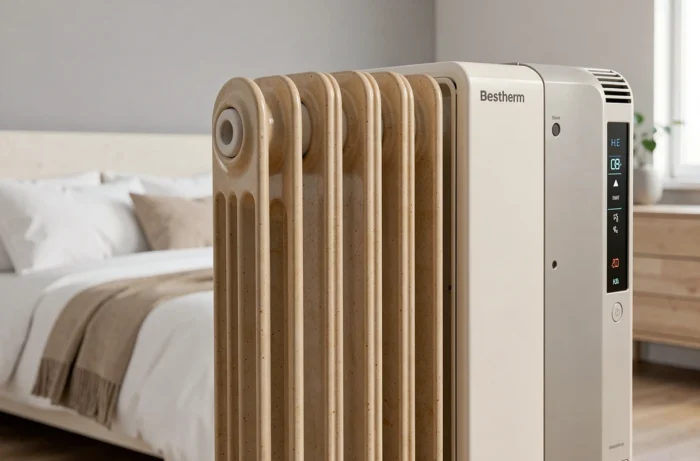
Bestherm is gaining visibility thanks to its radiators with ceramic inertia and aluminum heating bodies. Field tests confirm rapid temperature rise combined with good heat release after shutdown. The brand offers various finishes and an intermediate pricing position.
User reviews highlight a good balance between thermal comfort and energy consumption. The distribution network remains more limited than that of the leaders, which can complicate access to after-sales service in certain regions.
The choice of an electric radiator brand depends as much on budget and housing configuration as on heating technology. French manufacturers dominate this ranking thanks to their proximity in after-sales service and compliance with local regulatory requirements. Before any purchase, precise room-by-room sizing remains the best guarantee against overspending.