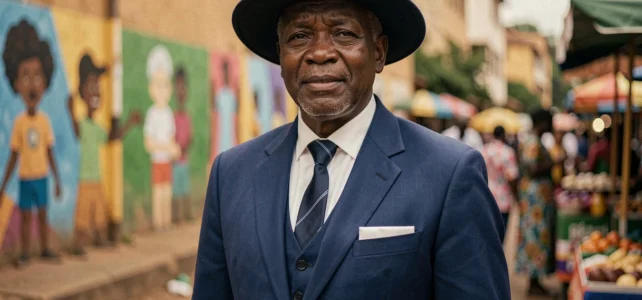
Measuring the influence of an African artist on the global stage requires cross-referencing several indicators: career longevity, number of musical groups launched, geographical reach, and the persistence of their legacy after their passing. Jules Shungu Wembadio Pene Kikumba, known as Papa Wemba, offers a unique case study in Congolese music. Born in 1949 in Lubefu, he passed away in 2016 on stage in Abidjan, having traversed several decades of Congolese rumba, transforming it at every stage.
Viva La Musica and the Factory of Congolese Artists
Most legends of Congolese rumba led an orchestra. What distinguishes Papa Wemba is the number of musicians trained within Viva La Musica who subsequently built independent careers. The orchestra, founded in the late 1970s, functioned as a permanent laboratory.
Where other groups kept their talents, Viva La Musica exported soloists who became major figures. This circulation of musicians nourished the entire Kinshasa scene for several decades. The nickname “School Master” or “Trainer of Idols” given to him by his peers was not honorary: it described a concrete functioning.
The website dedicated to Papa Wemba documents this artistic trajectory and its ramifications. In 2026, Fally Ipupa, one of the dominant voices of modern rumba, placed Papa Wemba at the heart of his “dream orchestra” alongside Koffi Olomide, Reddy Amisi, Madilu System, King Kester, and Bozi Boziana. This gesture illustrates a lineage claimed by the current generation.
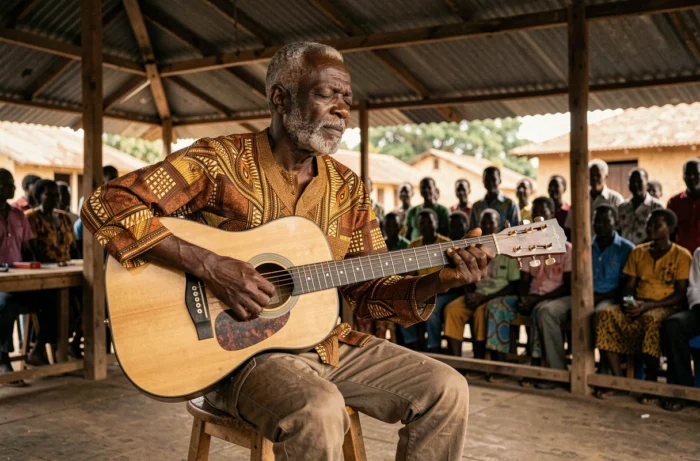
Congolese Rumba and International Career: Two Parallel Trajectories
Papa Wemba simultaneously led two distinct musical registers, which remains rare among Congolese artists of his generation. The table below contrasts these two aspects.
| Criterion | Congolese Rumba Aspect | World Music / International Aspect |
|---|---|---|
| Dominant Language | Lingala, Tshiluba | French, multilingual collaborations |
| Main Audience | DRC, Congolese diaspora, Central Africa | Europe, international festivals |
| Musical Style | Traditional rumba, ndombolo | Afro-pop fusion, European productions |
| Recognition | Popular nicknames (King of Rumba, High Priest) | Collaborations with Peter Gabriel, media appearances in France |
| Active Legacy in 2026 | National commemorations, Rumba Museum in Kinshasa | Reissue catalogs, INA documentaries |
However, these two trajectories did not always mutually reinforce each other. The Kinshasa audience sometimes criticized Papa Wemba for his “Westernized” productions, while the world music circuit often reduced his voice to vocal exoticism. This tension between local grounding and global ambition structured his entire career.
A Voice as an Identity Marker
Papa Wemba’s vocal range, a natural countertenor in a genre dominated by baritones and tenors, was his most immediate signature. This high voice, recognizable from the first notes, earned him the nickname “Nightingale.”
No other artist in Congolese rumba has occupied this vocal register with such consistency. This positioning made his songs difficult to cover, which partly explains why his tracks remain associated with him rather than the collective repertoire.
SAPE and Congolese Cultural Identity: A Legacy Beyond Music
Reducing Papa Wemba’s legacy to his discography would overlook a broader cultural phenomenon. His role in the dissemination of SAPE (Société des Ambianceurs et des Personnes Élégantes) had measurable effects on urban Congolese culture and the diaspora.
- The Molokaï neighborhood in Kinshasa, where he lived, has become a cultural pilgrimage site. In April 2026, Congolese authorities visited as part of the commemorations for the tenth anniversary of his passing, designating Molokaï as a living heritage of rumba and SAPE.
- SAPE, long perceived as a superficial movement by outside observers, has gained academic and museum recognition in recent years. Papa Wemba remains its guiding figure.
- The fashion style he embodied has influenced African fashion designers and has been the subject of documentaries aired on international channels.
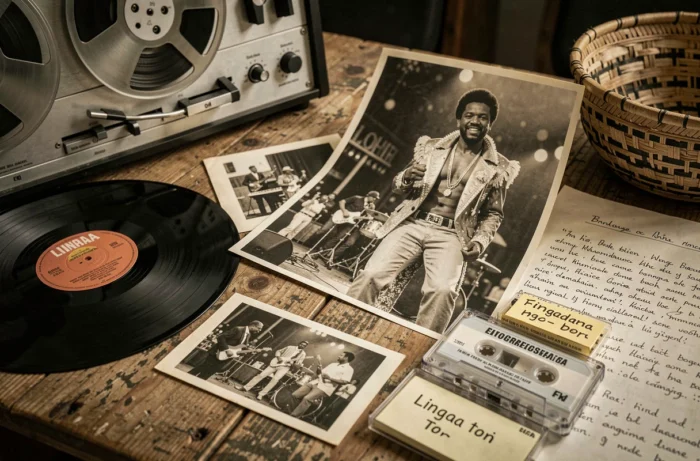
This extra-musical dimension explains why his legacy is now carried as much by institutions as by artists. In April 2026, three days of tribute were organized at the National Rumba Museum in Kinshasa, focusing on his role in the international dissemination of the genre.
Official Commemorations in 2026: Congolese Rumba Institutionalized
Ten years after his death, the institutional treatment of Papa Wemba’s memory has changed in nature. Tributes now come not only from musicians or fans but from the Congolese state itself.
The book “Le Carnet d’Eddy,” published by Les Plumes de Paloma in April 2026, traces the major milestones of his career. Its author, Eddy Ngombe, presents it as a contribution to a “commemoration dynamic” aimed at celebrating “his artistic reign as well as the lasting impact of his legend.”
A commemorative project led by former members of Viva La Musica has also been announced to mark this decade. Such a collective initiative, structured around a historic orchestra, is rare in African music, where tributes often remain individual.
What Transmission Data Reveals
The persistence of Papa Wemba in the references of active artists in 2026 is a more reliable indicator than streaming numbers alone. When Fally Ipupa names six artists to compose his ideal orchestra and includes Papa Wemba among them, he positions a deceased artist on the same level as musicians still active.
The song “Marie-Louise” continues to be cited as a major heritage piece of rumba, according to recent Congolese sources. This longevity of a specific title in collective memory is a rare marker for an African artist of this generation.
The inscription of Congolese rumba in the intangible cultural heritage by UNESCO in 2021 has reinforced this process. Papa Wemba did not live to see this recognition, but his work is one of the most cited pillars of it. The commemorations of 2026 show that his journey now serves as a thread to narrate the history of rumba itself.