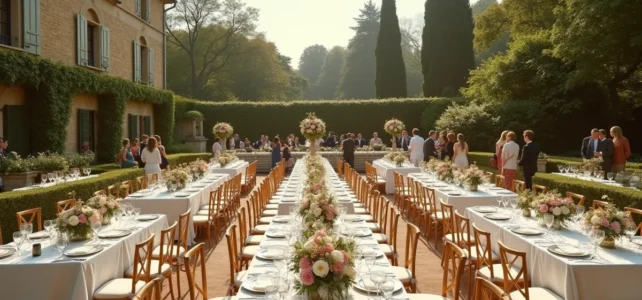
Organizing a wedding requires specific technical skills, from budget framing to coordinating vendors. We have gathered 20 concrete tips, based on field feedback and verified trends, to structure each step without sacrificing quality or peace of mind.
1. Lock in the timeline 18 months in advance

A detailed timeline set 18 months in advance allows you to book the most sought-after vendors before they fill up. We recommend establishing critical milestones (venue, caterer, photographer) within the first six months, then handling logistical details in the last quarter.
Working without a timeline exposes you to last-minute costs and compromises on the quality of services.
2. Set a budget envelope before visiting venues

The budget dictates every downstream decision. Defining a total amount and then breaking it down by category (venue, caterer, decoration, attire, entertainment) avoids the accumulation effect that often spirals out of control with meals and flowers.
A couple visiting venues without a budget framework ends up adjusting their expectations downward on other categories. Specialized resources like mbmariage.fr facilitate this step by centralizing vendors and estimates.
3. Anticipate the taxation of gifts received for the wedding

Since January 1, 2026, any cash or valuable gifts between individuals must be declared online to the tax authorities. Usual wedding gifts (envelopes of customary amounts, gifts in kind) remain exempt from this obligation.
However, a parental transfer intended to finance the venue or a donation of jewelry deemed unusual in relation to the donor’s assets falls within the scope. It’s best to clarify this point with a notary before the big day.
4. Choose a reception venue suitable for the actual guest count

A venue that is too large dilutes the atmosphere, while one that is too small creates discomfort. We observe that couples often underestimate the space needed for the cocktail hour, which requires more free space than a seated meal.
Checking the declared capacity in cocktail configuration, not just in banquet configuration, should become a standard reflex.
5. Negotiate a catering contract with a variability clause

The final number of guests almost always varies from the initial list. A variability clause in the catering contract (often plus or minus 5 to 10 guests) protects against excessive charges or penalties for partial cancellations.
We recommend negotiating this clause before signing, as few caterers offer it spontaneously.
6. Select a photographer based on complete reports

An Instagram portfolio only shows the best shots. Requesting a complete report (preparations, ceremony, reception) allows you to assess the consistency of the work, the management of difficult lighting, and the quality at the end of the evening.
The documentary style and posed style are not equal depending on the planned flow. A couple that plans little time for couple photos should prioritize a photographer experienced in candid reporting.
7. Include a welcome dinner the night before
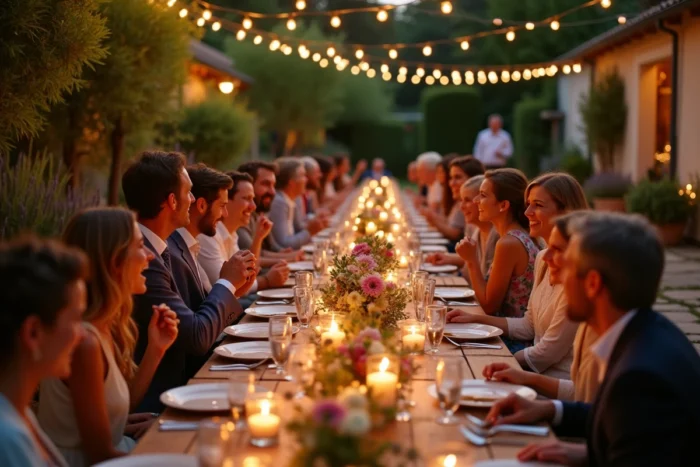
The welcome dinner allows families and guests from afar to meet in a relaxed setting. This informal meal reduces pressure on the big day and facilitates interactions during the cocktail hour.
It does not require the same level of service as the main meal, making it a manageable budget item.
8. Opt for an interactive cocktail hour

Live culinary animations (oyster bar, carving station, cocktails prepared in front of guests) transform the cocktail hour into a participatory moment. This format breaks the classic passivity of waiting between the ceremony and meal.
9. Favor seasonal flowers for decoration
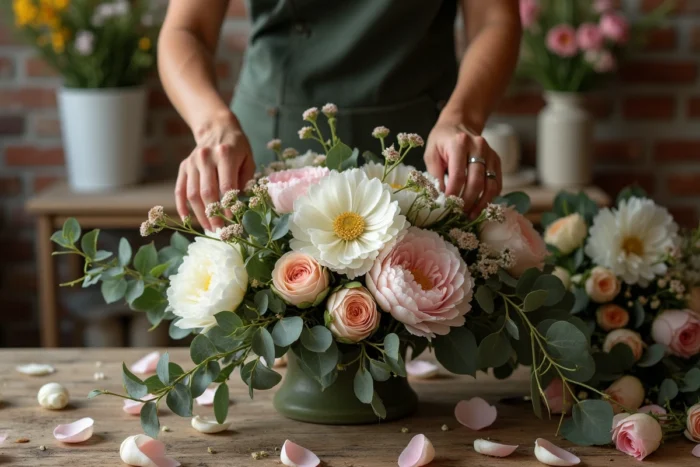
Seasonal flowers are cheaper and last longer. A florist specialized in weddings will be able to offer local alternatives that respect the desired palette without relying on fragile imports.
Validating the varieties available on the exact date of the wedding avoids unpleasant surprises during setup.
10. Prepare a written weather contingency plan

Even in the middle of summer, an indoor or tent contingency plan is essential. This point should be included in the venue contract, with a precise description of the backup solution (tent, adjoining room, covered terrace).
11. Write a specification document for the DJ or band

A music specification document (genres to prioritize, songs to avoid, key moments like the first dance) frames expectations and avoids misunderstandings. The DJ should know the minute-by-minute flow to synchronize their transitions with the activities.
12. Coordinate vendors through a single document

A shared document (spreadsheet or collaborative tool) centralizing schedules, contacts, venue access, and technical constraints simplifies coordination on the big day. Without this support, back-and-forth between vendors generates cascading delays.
13. Care for the secular ceremony with a prepared officiant
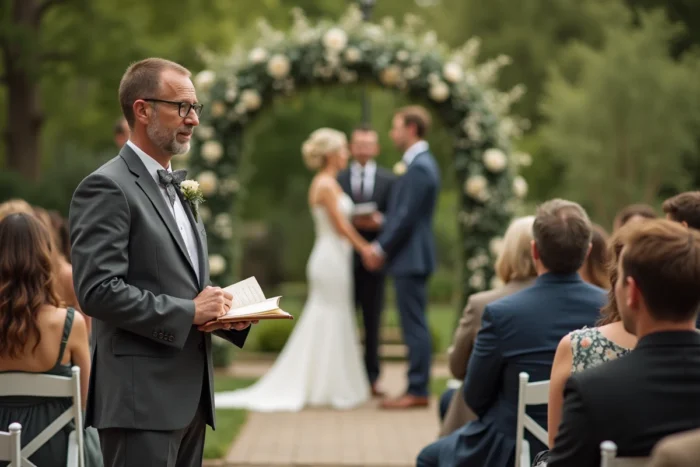
A successful secular ceremony relies on the quality of the text and the rhythm of the interventions. We recommend at least two rehearsals with the officiant and speakers to finalize the duration, transitions, and sound setup.
14. Think about guest logistics in advance

Shuttles, parking, nearby accommodations: these logistical details directly influence guest comfort and their availability for the evening. A detailed access plan and a list of accommodations sent with the invitation reduce last-minute questions.
15. Limit animations to a maximum of three highlights
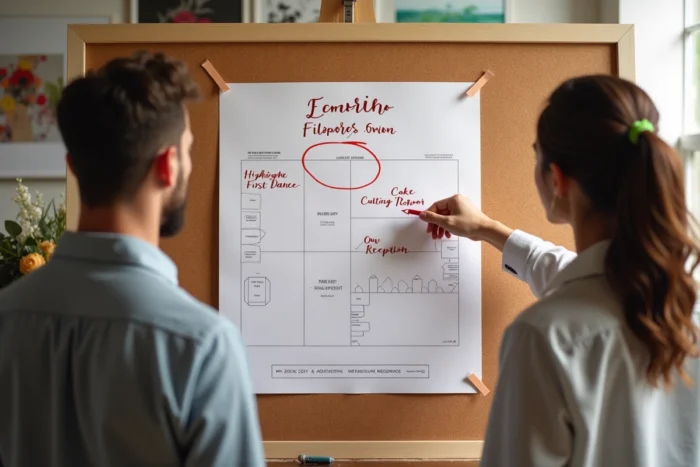
Too many animations fragment the evening and tire the guests. Three well-placed highlights (first dance, group game, end-of-evening surprise) are enough to maintain energy without overloading the schedule.
16. Invest in quality sound equipment
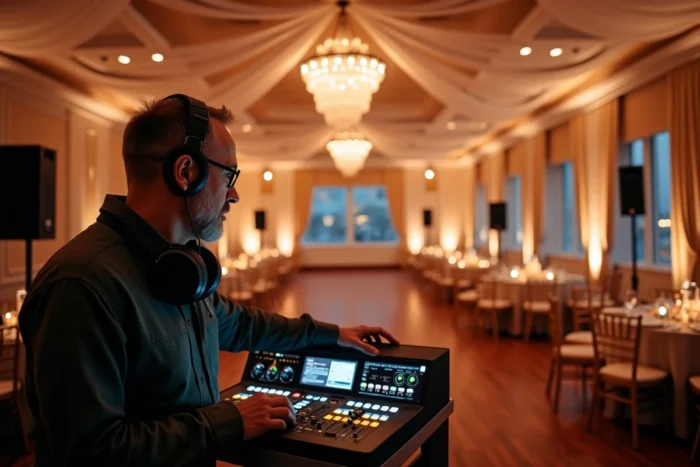
Undersized sound equipment ruins both the ceremony and the dance floor. Checking the necessary power based on the room volume and configuration (indoor, outdoor, under a tent) is part of the technical points to discuss with the DJ or band.
17. Consider survivor’s pension before choosing between marriage and PACS

In 2026, the survivor’s pension in the general regime and Agirc-Arrco remains reserved for married individuals. PACS partners and cohabiting couples do not have access to it. This legal point deserves consideration when choosing between marriage and PACS, especially in cases of significant income differences between spouses.
18. Prepare a brunch for the next day
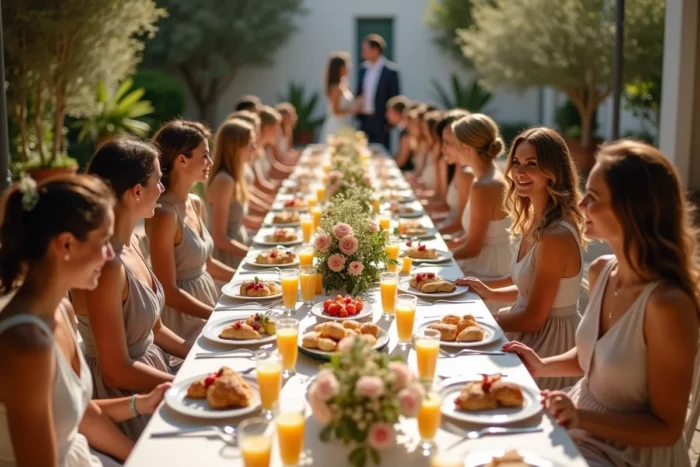
The brunch extends the festivities in a relaxed atmosphere. It allows you to enjoy close guests in a less formal format than the previous meal. A simple buffet with local products is enough to mark this final highlight.
19. Delegate the coordination of the big day to a wedding planner or master of ceremonies

Even a very organized couple benefits from delegating coordination on the wedding day. A wedding planner or master of ceremonies manages unforeseen events, adheres to the timeline, and serves as a single point of contact for all vendors.
This role frees the couple and their families from any logistical burden during the day.
20. Create an audio guestbook to keep memories alive
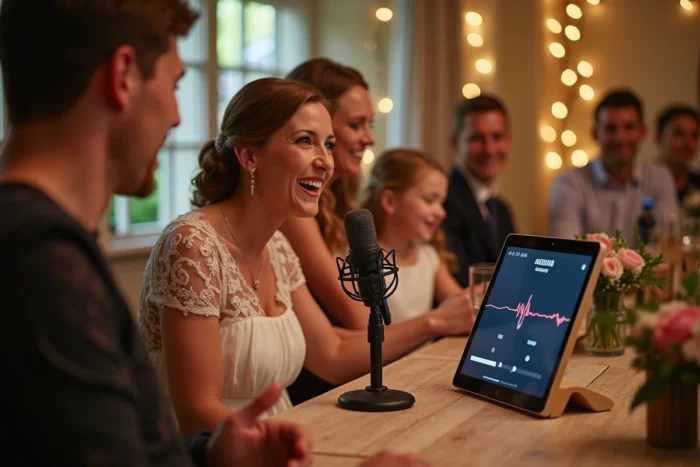
The audio guestbook replaces the paper book with voice messages recorded by guests. This format captures emotion, laughter, and intonations, making it a much richer memory than hastily written text at the end of the evening.
Each tip on this list targets a concrete friction point. A memorable wedding relies less on an extravagant budget than on methodical preparation and thoughtful choices at every step.