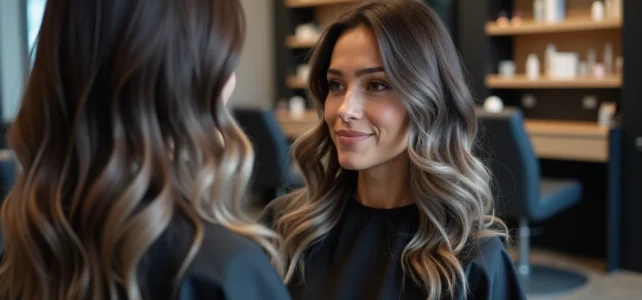
The grey blending on brown hair raises a specific technical question: how to blend white regrowth into a dark base without altering the depth of brown? The answer varies depending on the percentage of white hair, the starting shade, and the technique used. Comparing the available approaches allows for choosing the one that will produce the best light contrast on brown hair.
Classic balayage, lowlights, or reverse balayage on brown hair: what each approach produces
The three most common methods for grey blending on a brown base do not yield the same visual result at all. The table below summarizes their differences based on the parameters that matter in the salon.
| Technique | Principle | Result on brown | Maintenance |
|---|---|---|---|
| Classic lightening balayage | Lightened strands then toned in grey or silver | Marked contrast, high brightness but risk of altering the base | Frequent touch-ups to avoid the golden root effect |
| Lowlights (reverse balayage) | Adding darker strands around the white areas | Depth maintained, sophisticated salt and pepper effect | Spaced out, as the brown regrowth blends naturally |
| Combination of balayage + lowlights | Targeted lightening on the perimeter and lowlights in a crown | Maximum relief, smooth transition between brown and grey | Moderate, suitable for a transition over several months |
On dark brown hair, reverse balayage avoids over-lightening the base and produces a more natural result than a classic balayage alone. This is a point that specialized colorists have increasingly emphasized over the past two years, as it reduces chemical damage on hair that is often thicker and more resilient.
Several resources detail the grey blending techniques on brown based on the starting shade and the placement of the strands, two variables that radically change the final result.

Planning the transition on brown hair: why a single session is not enough
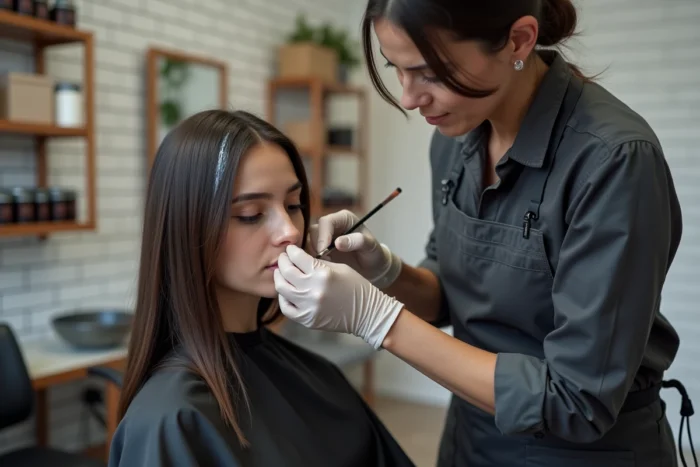
Wanting to transition from colored brown to a harmonious grey blending in one visit is the first mistake. On a dark brown base, colorists recommend a transition spread over six to twelve months minimum, with two to four sessions spaced a few weeks apart.
The reason is technical. A tinted brown contains artificial pigments that do not react like natural brown during lightening. Trying to bridge the gap in one session requires increasing the volume of peroxide, which breaks the fiber and yellows the strands instead of making them silver.
What happens at each session
- First session: the colorist places fine strands around the face and on the top of the head to initiate contrast, without touching the lengths still saturated with color
- Intermediate sessions: lowlights are gradually added to bring the lengths closer in shade to the white roots while maintaining relief
- Final session: a global adjustment (cold gloss or transparent gloss) unifies the whole and neutralizes any unwanted warm reflections on the brown
This progression also allows for testing the result over the weeks. Some brunettes discover that they prefer an intermediate stage, with just a few silver highlights, rather than a full salt and pepper look.
Cut and grey blending on brown: the combination that changes the result
Recent hair trends show that the cut is as strategic as the color in the success of grey blending on brown hair. A soft gradient or textured bob highlights the silver highlights while reducing the perception of dark mass created by uniform brown hair.
A graduated bob, for example, concentrates light on the perimeter strands and leaves the nape darker. This structural contrast amplifies the balayage effect without requiring additional lightening. In contrast, a straight cut without layering flattens the relief and makes the brown-grey transition less readable.
Haircuts with “soft layers” (light layering on the lengths) create movement that catches the light differently depending on the angle. On a brunette with grey blending, each layer reveals a distinct shade, creating that multidimensional effect sought in a successful salt and pepper look.
Maintenance and protection: the actions that preserve the shine of grey blending
A grey blending on a brown base requires a suitable care routine, as the lightened strands and the natural base have different needs. Two areas deserve particular attention.
Neutralizing yellowing
Lightened strands on brown hair can easily turn yellow or coppery under the influence of the sun and heat. A purple pigment shampoo used once or twice a week maintains the cool tone of silver highlights. Beyond this frequency, purple can dry out the fiber.
Thermal and UV protection
In recent years, grey blending specialists have emphasized the systematic use of thermal protectants and UV sprays for brunettes in transition. The lightened part of the hair is porous and absorbs more radiation, which accelerates the oxidation of pigments and dulls the result.
A leave-in treatment based on proteins or keratin, applied to the lengths before styling, temporarily fills the porosity and extends the hold of the gloss between two salon visits.
Grey blending on brown hair yields the best results when the transition is planned over several months, the cut complements the color, and the maintenance specifically targets the lightened strands. The reverse balayage technique remains, on a dark base, the approach that best preserves the natural depth of brown while allowing the whites to express themselves.