
We finish the last boss of Clair Obscur: Expedition 33, the credits roll, and a question immediately arises: have we just finished the game, or have we only unlocked the real part? The answer depends on what we call “endgame,” and on this point, online guides contradict each other quite freely.
Three definitions of endgame in Clair Obscur and why it changes everything
The problem begins as soon as we search for how many acts in Clair Obscur: some guides state three acts (excluding prologue), while others count six by including sub-story parts or an epilogue. This ambiguity is not trivial, as it shifts the boundary of endgame depending on the reading grid adopted.
We can identify at least three ways to define the beginning of endgame:
- Narrative endgame: it starts after the point of no return of the last act, when the main story is wrapped up and we access post-credits content.
- Systemic endgame: it begins as soon as the Eternal Tower opens, accessible from the third act, well before the end of the campaign.
- Optimization endgame: it starts when progression ceases to be guided by the story and becomes purely focused on builds, Verso stones, and farming optional bosses.
These three definitions do not overlap. A player entering the Eternal Tower in the middle of act three is technically in systemic endgame while still being in the middle of the story. Conversely, someone who finishes the campaign without touching the side content has never stepped into optimization endgame.
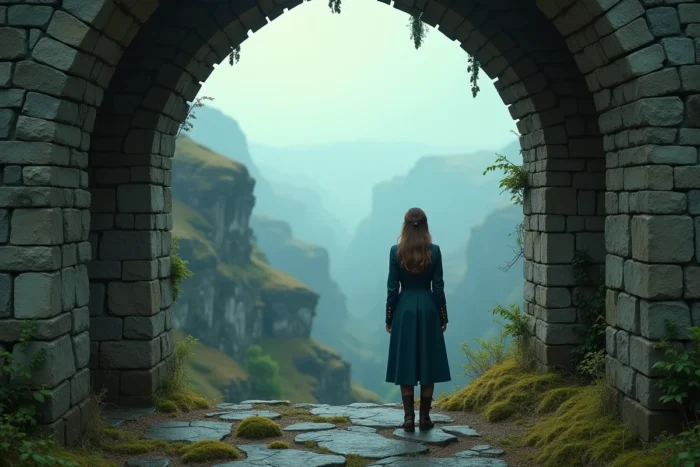
Eternal Tower and optional content: endgame starts before the end of the story
The Eternal Tower is the most concrete marker. Its access from the third act means that we can switch to a long progression loop (fights, rewards, increasing difficulty) without having resolved the arcs of Maëlle, Simon, or the other characters of the Expedition.
In practice, many players have noticed that they postpone the Tower to avoid breaking the narrative rhythm. Feedback varies on this point: some prefer to dive in early to collect equipment that will trivialize the bosses of the next act, while others believe it destroys the difficulty curve intended by the developers.
Optional bosses and Verso stones
The optional bosses scattered throughout the open world constitute the other pillar of endgame. They require levels and builds that the campaign alone does not allow to reach. Verso stones become the true engine of progression once the story is completed, replacing narrative experience with a loop of collection and improvement.
Post-campaign content is not limited to replaying harder fights. The upper floors of the Eternal Tower introduce mechanics absent from the main storyline, with icons and patterns specific to each tier.
Actual number of acts in Clair Obscur Expedition 33: beyond the numerical debate
Rather than deciding between three and six acts, it is more useful to understand how the game structures its progression. The prologue sets the context for Expedition 33. Then come the major narrative blocks, each centered on an area, characters, and an end-of-act boss.
The division into three acts corresponds to the major arcs of the story, while the division into six reflects internal subdivisions (changes of area, story revelations, gameplay shifts). Both are correct, but they measure different things.
What matters for the player wondering “where am I,” is less the act number than the concrete progression markers:
- Access to the Eternal Tower marks the transition to systemic endgame content.
- The point of no return of the last act locks certain side quests, signaling that we are entering the final narrative phase.
- The end credits open the post-game and, for those who have it, New Game+ with its difficulty adjustments.

Longevity and pacing: when to stop farming
The duration of the main campaign varies depending on play style, but endgame can easily double the time spent on the game if aiming for completion of the Eternal Tower and elimination of all optional bosses. We shift from a guided experience to an open loop where we set the objectives.
The classic trap is getting stuck in the farming loop without setting a threshold. The floors of the Tower renew, Verso stones accumulate, and we end up optimizing a build for content we have already mastered. Setting a specific goal before launching into endgame (a target boss, a Tower tier, a character to maximize) prevents turning enjoyment into a chore.
New Game+ and replayability
New Game+ reshuffles the cards while retaining the acquired progression. The acts are replayed with recalibrated enemies, giving new meaning to the build choices made during the first playthrough. For those who want to relive the story with a complete and optimized roster, it is a fourth form of endgame, more narrative than the previous three.
Ultimately, the question “when does endgame start” does not have a single answer because Clair Obscur: Expedition 33 overlays several layers of late-game content. The Eternal Tower, optional bosses, post-credits, and New Game+ do not start at the same time or for the same reasons. Identifying which of these layers interests us is the only way to know where we really stand.