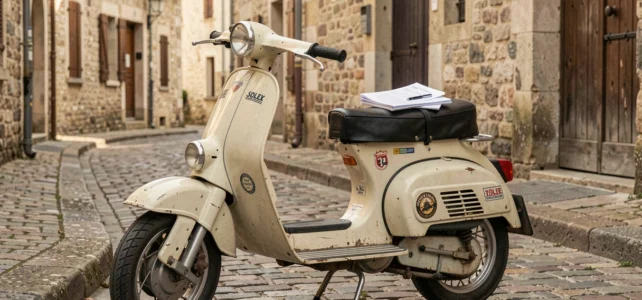
A collectible Solex does not fit into the standard pricing grids of generalist insurers. The auxiliary engine, the displacement of less than 50 cm³, and the status of an old moped create contractual gray areas that we regularly encounter when analyzing the contracts offered to collectors.
File of insured vehicles and registered Solex: what changes concretely
Since April 1, 2024, the green card is no longer issued or required for vehicles registered in France. Proof of insurance now relies on the File of Insured Vehicles (FVA), which is directly consulted by law enforcement during a check.
In August 2026, the FVA became accessible online to individuals. Any owner can verify that their registered Solex is indeed listed in the database, using the plate and the formula number from the registration certificate. For a collectible two-wheeler that is used only a few times a year, this verification avoids unpleasant surprises during a gathering or a ride.
Note: unregistered mopeds (put into circulation before 2004 and never re-registered) are not listed in the FVA. For those, the paper certificate remains the only proof of insurance. We recommend keeping this document in a pouch attached to the frame, as checks during retro events are increasing.
Choosing a suitable insurance for collectible Solex requires checking in advance whether your moped is registered or not, as the proof method and available coverage differ significantly.
Insurance obligation in the garage: the trap of the stored Solex
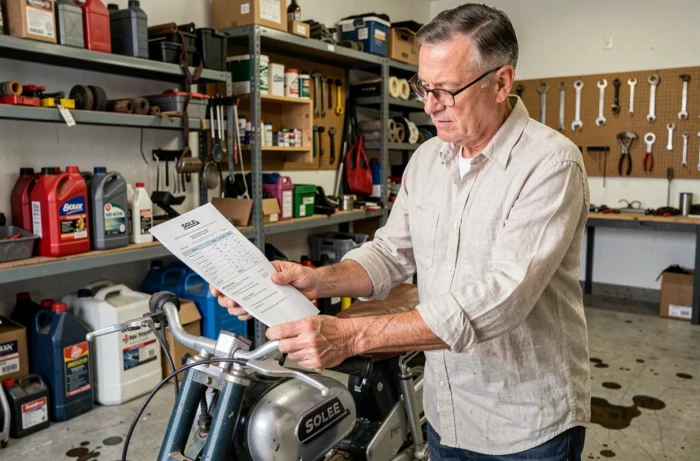
Every motor vehicle must be insured, even if it is immobilized in a garage. This obligation applies to a complete Solex with its engine, even if it hasn’t run for years. The only exception concerns a vehicle clearly not in a condition to be driven (disassembled engine, cut frame).
Specifically, a Solex displayed at a show or stored awaiting restoration must at least be covered by liability insurance. In the event of a lack of insurance, the fixed fine reaches a deterrent level, and the Fund for Guarantee of Mandatory Insurance can hold the owner liable in case of a claim.
For a stored model, third-party coverage is sufficient. The annual cost remains low for this type of moped, and some specialized companies offer “garage” contracts dedicated to non-operational collectible vehicles.
Coverage to target based on the actual use of the Solex
Liability insurance is the mandatory foundation. Beyond that, the choice of coverage depends on how you actually use your machine. We observe three distinct profiles among owners of old Solex.
- Exhibition and gathering use (less than ten outings per year): liability, theft, and fire coverage. Theft coverage is particularly relevant during outdoor events where Solex attract attention.
- Regular ride on departmental roads: add personal injury protection for the driver. The Solex offers no passive protection, and medical expenses in case of a fall far exceed the vehicle’s value.
- Mixed use for collection and short trips: an intermediate formula with breakdown assistance and towing. An old Solex can break down. It’s in its nature, and finding yourself pushing a VéloSolex for several kilometers is not pleasant.
Driver’s personal injury protection is the most underestimated coverage for this type of two-wheeler. Generalist contracts rarely offer it for collectible mopeds, which is why it’s important to turn to specialized insurers for vintage vehicles.
Agreed value or market value: a determining choice for the contract
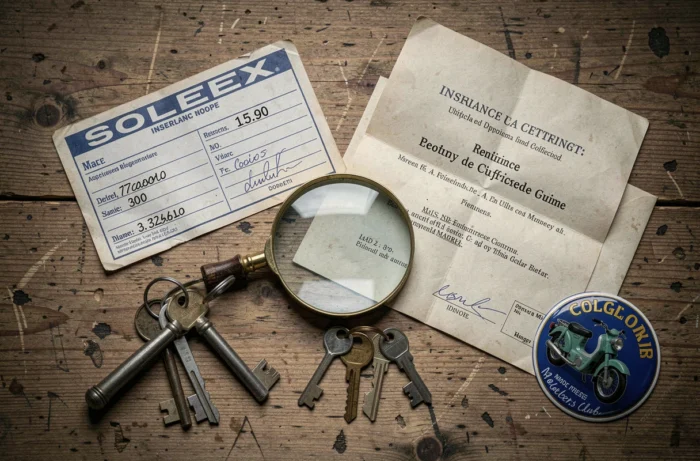
The value of a collectible Solex varies greatly depending on the model, restoration condition, and rarity of parts. A standard contract compensates based on market value, often derisory for an old moped. However, the actual cost of restoration or replacement of original parts far exceeds this estimate.
The agreed value allows for the contractual fixing of the compensation amount with the insurer. This mechanism usually requires prior expertise (photos, restoration invoices, certification from a brand club). In the event of a total loss, the compensation corresponds to the agreed amount, without dispute.
We systematically recommend the agreed value as soon as the Solex has undergone documented restoration. The premium increase remains modest compared to the risk of under-compensation.
Points of vigilance when subscribing to a collection contract
Collection vehicle contracts impose conditions that standard insurances do not mention. Before signing, several clauses deserve careful reading.
- The maximum annual mileage allowed: some contracts limit it to a few thousand kilometers per year. Exceeding this can lead to a loss of coverage.
- The minimum age of the driver and the seniority of the license: specialized insurers require a minimum age or several years of license to access their collection formulas.
- The parking location: a closed garage is often required to benefit from theft coverage. A Solex parked under a canopy or in an open shelter will not be covered.
- The obligation to have another insured primary vehicle, a common condition among retro vehicle insurers.
Comparing several quotes remains the most effective approach. The differences in price and coverage between a generalist insurer and a collection specialist can be considerable for the same Solex model.
The market for insurance for old mopeds remains narrow. Few players master the specifics of these vehicles, and a poorly calibrated contract can leave the owner without recourse when they need it most. Checking the presence of your Solex in the FVA, opting for a documented agreed value, and reading each usage limitation clause: these three reflexes protect better than a price comparison tool.